
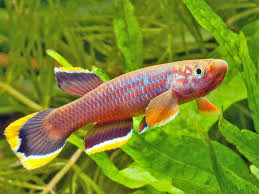
celia’s aphysemion (sold as pairs)
$24.00
Full Description
celia’s aphysemion care guide
scientific name: Aphysemion celiae
common name: Celia’s Aphysemion Killifish
general overview
The Celia’s Aphysemion is a small, colorful killifish from the rainforest streams and swamps of West-Central Africa, particularly Gabon and Cameroon.
It’s a member of the Aphysemion genus, known for their vivid coloration, elegant finnage, and peaceful nature.
Males are especially striking, showing iridescent blue-green bodies with red spotting and extended fins, while females remain smaller and less colorful.
This species is prized by collectors for its vibrant appearance, interesting breeding behavior, and calm temperament, making it a favorite for planted and specialty fish tanks.
aquarium setup & water parameters
| Parameter | Ideal Range / Notes |
|---|---|
| tank size | 10+ gallons for a pair or trio |
| temperature | 22 – 26 °C (72 – 79 °F) |
| pH | 6.0 – 7.2 |
| hardness | Soft to moderately hard water (2 – 10 dGH) |
| substrate | Fine sand or dark substrate to enhance colors |
| decor | Dense vegetation, floating plants, leaf litter, and gentle flow |
| lighting | Dim to moderate lighting preferred |
Celia’s Aphysemions thrive in well-planted aquariums with gentle filtration and low light levels. Floating plants help diffuse the light and make them feel secure.
temperament & compatibility
Celia’s Aphysemions are peaceful and shy, best kept in a species-only setup or with other small, gentle fish.
good tankmates:
-
Small tetras (ember, neon, green neon)
-
Dwarf rasboras
-
Corydoras pygmaeus or hastatus
-
Small shrimp (with caution; fry may be eaten)
Avoid fin-nipping or boisterous fish that could stress or outcompete them for food.
Keep them in pairs or trios (1 male : 2 females) to reduce aggression between males and encourage breeding.
diet & feeding
Aphysemion celiae are micro-predators, feeding mainly on small invertebrates and insect larvae in the wild.
offer a variety of:
-
Live or frozen foods (daphnia, baby brine shrimp, bloodworms, mosquito larvae)
-
High-quality micro pellets or finely crushed flakes
-
Occasional vegetable-based foods for balance
Feed small portions 2–3 times daily, as they prefer frequent, light feedings.
breeding information
Celia’s Aphysemions are non-annual egg scatterers, meaning they lay eggs regularly rather than seasonally.
breeding setup:
-
Small tank (5–10 gallons) with a spawning mop or fine plants (like java moss)
-
Slightly acidic, soft water around 24 °C (75 °F)
-
Pair or trio of healthy adults
Females deposit eggs among the plants or mop strands. Eggs hatch in 10–14 days, and fry can be fed infusoria or baby brine shrimp once free-swimming.
Remove adults after spawning if you want to maximize fry survival.
maintenance & care tips
-
Keep a tight lid — killifish are excellent jumpers.
-
Perform small, regular water changes (20–25% weekly) to maintain stability.
-
Use peat or leaf litter to create natural tannins and replicate blackwater conditions.
-
Avoid strong current — they prefer calm, shallow waters.
-
Provide dim lighting to reduce stress and enhance coloration.
key facts summary
| Attribute | Detail |
|---|---|
| Origin | Gabon and Cameroon, West Africa |
| Adult size | 1.5 – 2 inches (3.5 – 5 cm) |
| Temperament | Peaceful, shy |
| Lifespan | 2 – 3 years |
| Care level | Moderate |
| Breeding type | Egg scatterer (non-annual) |
| Diet | Carnivorous micro-predator |
Out of Stock