
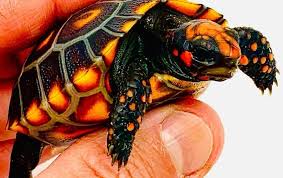
CHERRY HEAD RED FOOTED TORTOISE (Chelonoidis carbonaria)
$650.00
Full Description
Cherry Head Red-Footed Tortoise Care Guide
Species Overview
-
Common Name: Cherry Head Red-Footed Tortoise
-
Scientific Name: Chelonoidis carbonaria
-
Morph: Smaller, more colorful variant of the red-footed tortoise
-
Lifespan: 40–60+ years
-
Size: 10–12 inches as adults (smaller than typical red-foots)
-
Origin: South America (Brazilian rainforest regions)
-
Temperament: Gentle, curious, and interactive
Enclosure Requirements
Indoor Enclosure
-
Size: Minimum 4 ft x 2 ft for juveniles, 6 ft x 3–4 ft for adults
-
Enclosure Type: Tortoise table or enclosed setup to hold humidity
-
Substrate: Moisture-retaining and safe options like:
-
Coconut coir
-
Cypress mulch
-
Organic topsoil (no fertilizers or perlite)
-
-
Depth: At least 3–4 inches for burrowing
Outdoor Enclosure (if climate allows)
-
Safe if daytime temps stay 75–90°F
-
Secure perimeter (they can dig!)
-
Provide shady areas, shelters, and humid hides
️ Temperature & Humidity
-
Basking Spot: 90–95°F (32–35°C)
-
Ambient Temp: 80–88°F (27–31°C)
-
Night Temp: 70–75°F (21–24°C)
-
Humidity: 70–85%
-
Use misting, humid hides, or a fogger
-
Keep substrate damp but not soaked
-
☀️ Lighting & UVB
-
UVB Requirement: Yes — 10–12 hours daily
-
Use a T5 HO 5.0 or 10.0 UVB bulb
-
Replace bulbs every 6–12 months
-
-
Supplemental Heat: Ceramic heat emitter (CHE) or radiant panel for night warmth
-
Natural sunlight: Excellent when safe and available
Diet
Omnivorous (unlike many tortoises)
-
Leafy Greens (60%): Dandelion, collard, escarole, hibiscus leaves
-
Fruits (15–25%): Papaya, mango, melon, strawberries, banana (limited)
-
Other Veggies: Squash, pumpkin, bell pepper, mushrooms
-
Protein (5–10%): Insects, cooked egg, or low-fat dog food (1x per week)
-
Calcium: Dust food 2–3x per week with calcium powder (without D3 if under UVB)
-
Cuttlebone: Provide at all times for beak and calcium needs
Water & Soaking
-
Shallow water dish (large enough to soak in)
-
Change daily
-
-
Soak juvenile tortoises daily, adults 2–3x per week (especially in dry environments)
Cleaning & Maintenance
-
Spot Clean daily (waste and food)
-
Deep Clean monthly or as needed (change substrate)
-
Prevent mold buildup in humid environments
Behavior & Enrichment
-
Very social, especially with regular gentle handling
-
Provide enrichment like:
-
Logs to climb over
-
Edible plants
-
Variety in terrain and hiding spots
-
-
Slow but curious — will explore and learn their enclosure
Common Health Issues
| Issue | Cause | Prevention/Treatment |
|---|---|---|
| Pyramiding | Low humidity, poor diet | Maintain high humidity, balanced nutrition |
| Respiratory infections | Cold or dry conditions | Keep temps and humidity consistent |
| Shell rot | Constant wet substrate | Provide dry areas and good ventilation |
| Parasites | Contaminated food or enclosure | Fecal tests and regular cleaning |
Cherry Head vs. Regular Red-Footed
| Feature | Cherry Head | Regular Red-Footed |
|---|---|---|
| Size | Smaller (10–12″) | Larger (12–14″+) |
| Color | Brighter reds, darker shells | More muted red and yellow tones |
| Native Range | Southeastern Brazil | Broader South American range |
| Behavior | Slightly more shy at times | Confident and bold |
✅ Essential Checklist
-
Spacious, enclosed enclosure (indoor or safe outdoor)
-
Warm basking spot & ambient temps
-
High humidity with moist substrate
-
Daily access to clean, shallow water
-
Mixed omnivore diet with calcium
-
UVB light 10–12 hours/day
-
Regular health checks and enrichment