
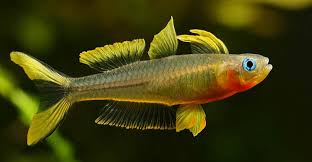
Forktail rainbowfish (Pseudomugil furcatus) sold as pairs
$26.50
Full Description
forktail rainbowfish care guide
scientific name: Pseudomugil furcatus
common name: Forktail Rainbowfish
general overview
The Forktail Rainbowfish is a small, peaceful, and colorful freshwater fish native to northern Australia and Papua New Guinea. Its name comes from its distinct forked tail and the subtle iridescent blue and silver hues along its body.
Forktail Rainbowfish are shoaling fish that thrive in groups of at least 6–10 individuals. They are highly active swimmers and display their full beauty when kept in a well-planted aquarium.
aquarium setup & water parameters
| Parameter | Ideal Range / Notes |
|---|---|
| tank size | Minimum 15 gallons (57 L) for a small shoal |
| temperature | 23 – 28 °C (73 – 82 °F) |
| pH | 6.5 – 7.5 |
| hardness | Soft to moderate (5 – 15 dGH) |
| substrate | Fine gravel or sand |
| decor | Plants, driftwood, open swimming areas |
| lighting | Moderate to enhance coloration |
A heavily planted tank with open swimming areas is ideal. Floating plants can reduce stress and mimic their natural habitat.
temperament & compatibility
Forktail Rainbowfish are peaceful, non-aggressive, and ideal for community tanks with other small, similarly calm species.
ideal tankmates:
-
Small tetras (e.g., neon, ember)
-
Rasboras and danios
-
Dwarf rainbowfish
-
Small peaceful livebearers
Avoid aggressive or larger fish that may nip fins or intimidate them.
diet & feeding
Forktail Rainbowfish are omnivores and enjoy a varied diet of live, frozen, and high-quality flake foods.
recommended foods:
-
Daphnia, brine shrimp, microworms
-
Micro pellets or high-quality flake foods
-
Occasional finely chopped vegetables
Feed small portions 2–3 times daily, ensuring all food is eaten to maintain water quality.
breeding information
Forktail Rainbowfish are egg scatterers, laying small eggs among plants or spawning mops.
breeding conditions:
-
Water temperature: 25–27 °C (77–81 °F)
-
Slightly soft and neutral water is ideal
-
Remove adults after spawning to protect eggs
Fry can be fed infusoria or newly hatched brine shrimp until they are large enough for micro pellets.
key facts summary
| Attribute | Detail |
|---|---|
| Origin | Northern Australia & Papua New Guinea |
| Adult size | 1.5–2 inches (4–5 cm) |
| Temperament | Peaceful, shoaling |
| Lifespan | 3–5 years |
| Care level | Intermediate |
| Diet | Omnivore |
| Breeding type | Egg scatterer, no parental care |
10 in stock