
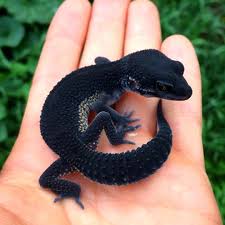
GECKO BLACK NIGHT (Eublepharis macularius)
$300.00
Full Description
Here’s a complete care guide for the Black Night Leopard Gecko, one of the rarest and most striking morphs of Eublepharis macularius. Known for their solid black or extremely dark melanistic coloration, Black Nights are selectively bred and often more expensive — but their care requirements are generally the same as standard leopard geckos, with a few important notes due to their genetics.
Black Night Leopard Gecko Care Guide
(Eublepharis macularius – melanistic morph)
Morph Overview
| Trait | Description |
|---|---|
| Coloration | Jet black to charcoal body with minimal to no patterning (melanistic) |
| Eyes | Typically dark or jet black |
| Genetics | Line-bred trait (not a simple dominant/recessive gene) |
| Rarity | Extremely rare and often high-value |
⚠️ Black Nights are a melanistic line-bred morph and not true black in many cases — lighting and breeding quality affect how dark they appear.
Size & Lifespan
| Trait | Details |
|---|---|
| Adult Size | 7–10 inches (18–25 cm) |
| Adult Weight | 50–90g |
| Lifespan | 15–20 years in captivity |
Enclosure Setup
Tank Size
| Gecko Age | Minimum Size |
|---|---|
| Juvenile | 10–20 gallons |
| Adult | 20–40 gallons (long tank preferred) |
A low, long tank helps maintain proper temperature gradients.
Substrate
-
Safe Options:
-
Paper towels (hatchlings or quarantine)
-
Reptile carpet
-
Slate/ceramic tiles
-
Clay/soil mix (bioactive setups)
-
-
Avoid: Loose sand, wood chips, calcium sand (impaction risk)
Hides (minimum 3)
-
Warm hide on the heat mat
-
Cool hide on the opposite side
-
Moist hide (sphagnum moss or eco earth) for shedding
Decor
-
Rocks, cork bark, safe driftwood
-
Artificial plants or low-light live plants
-
Minimal climbing needed
️ Temperature & Humidity
| Area | °F | °C |
|---|---|---|
| Warm Side | 88–92°F | 31–33°C |
| Cool Side | 75–80°F | 24–27°C |
| Nighttime | 68–75°F | 20–24°C |
| Humidity | 30–40% | Up to 80% in moist hide |
Heating
-
Under Tank Heater (UTH) with thermostat
-
Keep belly heat consistent for digestion
-
Optional ceramic heater if your room gets cold at night
Lighting
-
No special lighting needed — they are nocturnal
-
UVB is optional (a low-level 2.0–5.0 UVB bulb can provide benefit)
-
Avoid bright lights — even though not albino, Black Nights prefer low light environments to preserve coloration and reduce stress
️ Feeding & Supplements
Staple Insects
-
Crickets
-
Dubia roaches
-
Black soldier fly larvae
-
Mealworms (in moderation)
Treats
-
Superworms
-
Waxworms (sparingly – high fat)
Feeding Schedule
| Age | Frequency |
|---|---|
| Juvenile | Daily |
| Adult | Every 2–3 days |
Supplements
| Supplement | Frequency |
|---|---|
| Calcium (no D3) | Always in enclosure |
| Calcium (with D3) | 2x/week |
| Multivitamin | 1x/week |
Always dust insects before feeding.
Maintenance
-
Daily: Remove droppings, change water
-
Weekly: Clean humid hide and dishes
-
Monthly: Full clean of tank and accessories (unless bioactive)
⚕️ Health & Morph-Specific Notes
Morph Concerns
-
Inbreeding Risk: Due to limited bloodlines, some Black Nights may suffer from reduced vigor or subtle deformities if improperly bred
-
Stress Sensitivity: May be more shy or light-sensitive
-
Tail Alert: Maintain tail thickness – thin tail = health issue
General Health
-
Full tail, bright eyes, active at dusk = healthy gecko
-
Ensure proper calcium to avoid MBD (Metabolic Bone Disease)
-
Provide humidity to aid with shedding
Handling
-
Temperament: Usually calm but can be shy
-
Tips:
-
Handle gently and infrequently until fully accustomed
-
Avoid bright rooms during handling
-
Never grab from above (predator reflex)
-
✅ Black Night Gecko Care Checklist
✔ 20–40 gallon tank with UTH and thermostat
✔ 3 hides (warm, cool, moist)
✔ Soft lighting or no lights at all
✔ Dust insects with calcium/D3
✔ Clean, safe substrate
✔ Quiet, low-stress environment
✔ Gentle handling only
✔ Avoid overexposure to bright light
Breeding Note (Optional)
-
Black Night is line-bred, not a single-gene morph
-
Breeding two Black Nights can darken offspring, but care must be taken to avoid excessive inbreeding
-
Crosses with Mack Snow or Eclipse may retain melanism and improve genetic health