
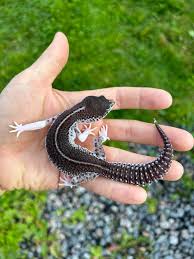
GECKO BLACK NIGHT SUPER SNOW CARE GUIDE (Eublepharis macularius)
$300.00
Full Description
Here is a complete care guide for the Black Night Super Snow Leopard Gecko (Eublepharis macularius) — a rare and visually striking combination of two morphs:
-
Black Night: a line-bred melanistic (very dark/black) trait
-
Super Snow: a co-dominant morph producing geckos with a high-contrast, speckled, and patternless body and solid black eyes when homozygous
Together, this morph tends to produce a dark, sometimes almost black gecko with reduced or speckled patterning and solid black eyes, making them highly desirable but also more delicate in some cases.
Black Night Super Snow Leopard Gecko Care Guide
Scientific name: Eublepharis macularius
Morph combo: Black Night (melanistic line-bred) × Super Snow (homozygous Mack Snow)
Morph Traits
| Trait | Description |
|---|---|
| Coloration | Deep gray to black with muted or speckled patterns |
| Eyes | Solid black (Super Snow trait) |
| Pattern | Often reduced or “freckled” |
| Light Sensitivity | High — due to solid black eyes and dark pigmentation |
| Genetic Notes | Super Snow is a co-dominant morph (Mack Snow × Mack Snow); Black Night is line-bred, not a gene |
Size & Lifespan
| Feature | Range |
|---|---|
| Length | 7–10 inches (18–25 cm) |
| Weight | 50–90g (adult) |
| Lifespan | 15–20 years (with care) |
Enclosure Setup
Minimum Tank Size
| Gecko Size | Tank Size |
|---|---|
| Juvenile | 10–20 gallons |
| Adult | 20–40 gallon breeder |
Prioritize floor space for ground movement and temperature zoning.
Substrate
-
Safe Options:
-
Reptile carpet
-
Slate or ceramic tiles
-
Paper towels (for hatchlings/quarantine)
-
Clay/soil/sand bioactive mix (advanced)
-
-
Avoid:
-
Loose sand or wood chips (impaction risk)
-
Calcium sand
-
Hides (Minimum 3)
-
Warm Hide (on heat source)
-
Cool Hide (on cool side)
-
Humid Hide (moist sphagnum moss or coco fiber)
Decor
-
Smooth rocks, branches, bark, and hides
-
Artificial or low-light real plants
-
Minimal lighting preferred — reduce exposure to overhead bright lights
️ Temperature & Humidity
| Zone | Ideal Range |
|---|---|
| Warm Side | 88–92°F (31–33°C) |
| Cool Side | 75–80°F (24–27°C) |
| Night Temp | 68–75°F (20–24°C) |
| Humidity | 30–40% (ambient) |
| Humid Hide | 70–80% |
Heating
-
Under Tank Heater (UTH) with thermostat (belly heat is crucial)
-
Optional: Ceramic Heat Emitter (CHE) if temps drop too low at night
-
Avoid bright bulbs, especially for this morph due to eye and skin sensitivity
Lighting
| Type | Use |
|---|---|
| UVB (2.0–5.0) | Optional, but beneficial for D3 production and activity |
| Day/Night Cycle | 12 hrs light / 12 hrs dark |
| Bright Light? | Avoid — Super Snow eyes are highly light-sensitive |
⚠️ Provide shaded hides and dim zones in the enclosure.
️ Feeding & Supplements
Insect Diet
| Feeder Insects | Notes |
|---|---|
| Crickets | Staple feeder |
| Dubia Roaches | Excellent nutrition |
| Black Soldier Fly Larvae | Calcium-rich, gut-load well |
| Mealworms | OK in moderation |
| Superworms | Use sparingly (high fat) |
| Waxworms | Occasional treat only |
Feeding Schedule
| Age | Frequency |
|---|---|
| Juveniles | Daily |
| Adults | Every 2–3 days |
Supplements
| Supplement | Frequency |
|---|---|
| Calcium (no D3) | Always in tank |
| Calcium + D3 | 2× per week |
| Multivitamin | 1× per week |
Dust feeders before feeding; gut-load insects 24 hours prior for best results.
Tank Maintenance
-
Daily: Spot clean waste, refresh water
-
Weekly: Clean hides and feeding dishes
-
Monthly: Deep clean or refresh substrate (unless bioactive)
⚕️ Health & Morph-Specific Notes
Super Snow Concerns
-
Black eyes make them very sensitive to light
-
May exhibit mild neurological wobble (similar to Enigma in rare cases but not linked)
-
Often more shy than typical leos
Black Night Concerns
-
Genetic bottlenecking from inbreeding may reduce vigor
-
Some lines may be more prone to stress, especially in bright or high-traffic areas
-
Coloration may fade in intense lighting or with age
Handling Tips
| Tip | Notes |
|---|---|
| Approach from the side | Avoid overhead movement (they are ground-dwellers) |
| Start slow | Let them crawl onto your hand |
| Limit duration | 5–10 mins per session is ideal |
| Avoid during shedding | They’re more sensitive then |
| Avoid bright rooms | May cause stress or eye discomfort |
✅ Care Checklist
✔ 20–40 gallon long tank
✔ UTH with thermostat
✔ 3 hides (warm/cool/moist)
✔ Low or no overhead light
✔ Light-sensitive handling routine
✔ Insect-based diet with dusted supplements
✔ Regular spot cleaning and monthly deep cleans
✔ Temperature gradient and moisture control