
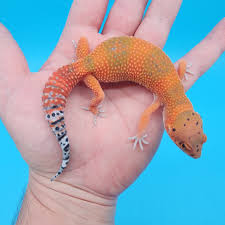
GECKO BLOOD EMERINE HIGH RED (Eublepharis macularius)
Full Description
Here’s a full care guide for the Blood Emerine High Red Leopard Gecko — a striking and highly sought-after morph of Eublepharis macularius known for its deep red-orange body, green hues, and reduced spotting.
Blood Emerine High Red Leopard Gecko Care Guide
Scientific Name: Eublepharis macularius
Morph: Blood Emerine (Blood × Emerine) with enhanced red/orange coloration
Type: Polygenic (line-bred), non-inheritable in simple Mendelian terms
This morph is a combination of the Blood line (deep red/orange from The Urban Gecko) and Emerine (green + tangerine influence), selectively bred for extreme red saturation and minimal patterning.
Morph Profile
| Trait | Description |
|---|---|
| Coloration | Bright tangerine to deep red body, sometimes with green tints near the limbs or tail base |
| Pattern | Varies: striped, banded, or nearly patternless depending on line |
| Genetics | Polygenic (line-bred); not a single-gene morph |
| Behavior | Typical of leopard geckos — calm and terrestrial |
Size & Lifespan
| Feature | Range |
|---|---|
| Length | 7–10 in (18–25 cm) |
| Weight | 50–90g |
| Lifespan | 15–20 years (in captivity) |
Enclosure Setup
Tank Size
| Age Group | Tank Size |
|---|---|
| Hatchling | 10–15 gallons |
| Adult | 20–40 gallon breeder |
Floor space is more important than height.
Substrate Options
-
✅ Safe:
-
Slate or ceramic tile
-
Paper towel (ideal for juveniles or quarantine)
-
Reptile carpet
-
Bioactive with clay/soil/sand mix (advanced)
-
-
❌ Avoid:
-
Loose dry sand
-
Calcium sand
-
Bark chips or wood mulch (impaction risk)
-
Hides (Minimum 3)
| Hide Type | Function |
|---|---|
| Warm Hide | Thermoregulation |
| Cool Hide | Security |
| Moist Hide | Aids shedding (coco fiber, sphagnum moss) |
Decor
-
Naturalistic rocks, logs, foliage
-
Clutter = security for shy individuals
-
Light-diffusing decor helps preserve color and reduce stress
️ Temperature & Humidity
| Zone | Temperature (°F) | Temperature (°C) |
|---|---|---|
| Warm Side | 88–92°F | 31–33°C |
| Cool Side | 75–80°F | 24–27°C |
| Nighttime | 68–75°F | 20–24°C |
| Humidity | 30–40% (ambient), 70–80% in moist hide |
Heating
-
Under Tank Heater (UTH) controlled by a thermostat is crucial
-
Avoid basking bulbs (can cause stress and dull color)
Lighting
| Type | Details |
|---|---|
| UVB | Optional (2.0–5.0 for diurnal benefit) |
| Day/Night Cycle | 12 hours on / 12 hours off |
| Bright Light | Not needed — use low ambient lighting |
️ Diet & Supplements
Primary Feeders (gut-loaded)
| Insect | Notes |
|---|---|
| Dubia Roaches | High in protein |
| Crickets | Active and accessible |
| BSF Larvae | Great calcium source |
| Mealworms | OK in moderation |
| Superworms | Occasional (high fat) |
| Waxworms | Rare treat only |
Feeding Frequency
| Age | Frequency |
|---|---|
| Juveniles | Daily |
| Adults | Every 2–3 days |
Supplement Schedule
| Supplement | Frequency |
|---|---|
| Calcium (no D3) | Always in tank |
| Calcium + D3 | 1–2× per week |
| Multivitamin | 1× per week |
Dust feeders and gut-load 24 hours before offering.
Enclosure Maintenance
| Task | Frequency |
|---|---|
| Spot clean | Daily |
| Replace water | Daily |
| Deep clean | Monthly (or as needed) |
⚠️ Morph-Specific Notes
| Concern | Recommendation |
|---|---|
| Color Fading | Avoid strong UV/basking bulbs; use ambient light |
| Selective Breeding | Only buy from reputable breeders (quality lines) |
| Overheating | Monitor heat to prevent stress or appetite loss |
These geckos look their best in moderate lighting. Harsh exposure can dull their vivid reds and oranges over time.
Handling Tips
| Tip | Why |
|---|---|
| Wait 1–2 weeks post-arrival | Reduces stress, allows settling in |
| Handle in evening | They’re crepuscular |
| Use gentle, slow motions | Builds trust and reduces skittishness |
| Limit session to 10 mins | Prevents overheating or stress |
✅ Quick Checklist
✔ 20–40 gallon long tank
✔ Under-tank heater with thermostat
✔ 3 hides (warm, cool, moist)
✔ Gut-loaded insect diet
✔ Supplements: calcium + D3 + multivitamin
✔ Low lighting or ambient light
✔ Daily spot cleaning
✔ Color-conscious husbandry (no excessive light/heat)