
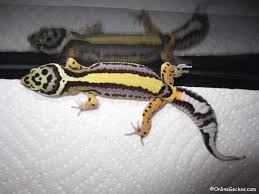
GECKO BOLD STRIPE BANDIT (Eublepharis macularius)
$110.00
Full Description
ere’s a complete care guide for the Bold Stripe Bandit Leopard Gecko — a stunning and popular morph of Eublepharis macularius known for its clean markings and bold head pattern.
Bold Stripe Bandit Leopard Gecko Care Guide
Morph Overview:
-
Species: Eublepharis macularius
-
Morph Name: Bold Stripe Bandit
-
Genetics:
-
Bold Stripe: Clean dorsal stripe pattern with minimal side spotting
-
Bandit: Defined black “bandit mask” across the eyes
-
-
Eyes: Typically dark, not albino (normal light sensitivity)
✅ No special care is needed for this morph beyond standard Leopard Gecko care — but visual appeal and pattern consistency may influence breeding value and popularity.
Size & Lifespan
| Trait | Info |
|---|---|
| Adult Size | 7–10 inches (18–25 cm) |
| Weight | 50–90g average |
| Lifespan | 15–20 years with proper care |
Enclosure Requirements
Tank Size
| Age | Tank Size |
|---|---|
| Juvenile | 10–20 gallon long |
| Adult | 20–40 gallon breeder |
Horizontal space is more important than vertical height.
Substrate
-
Safe Choices:
-
Reptile carpet
-
Paper towels (quarantine/hatchlings)
-
Slate or ceramic tiles
-
Bioactive mix (clay/topsoil/sand) for experienced keepers
-
-
Avoid: Loose sand, calcium sand — impaction risk
Hides (minimum 3)
-
Warm Hide (on heat source)
-
Cool Hide (opposite side)
-
Humid Hide (moist sphagnum moss)
Decor
-
Rocks, bark, cork, driftwood
-
Artificial or real plants (non-toxic)
-
Minimal clutter for bold morph visibility
️ Temperature & Humidity
| Zone | °F | °C |
|---|---|---|
| Warm Side | 88–92°F | 31–33°C |
| Cool Side | 75–80°F | 24–27°C |
| Night Temp | 70–75°F | 21–24°C |
| Humidity | 30–40% | 70–80% in humid hide |
Heating
-
Under Tank Heater (UTH) + thermostat
-
Optional: Low wattage ceramic heater in cool climates
-
Avoid bright overhead bulbs (they are nocturnal)
Lighting
-
UVB: Optional (2.0–5.0 UVB can be beneficial)
-
Light Cycle: 12 hours on/off
-
Important: Provide dark hiding spaces during the day
Diet & Feeding
Primary Diet: Insectivorous
| Insects | Notes |
|---|---|
| Crickets | Active, nutritious |
| Dubia roaches | Excellent staple |
| Mealworms | Good staple in moderation |
| Superworms | High fat, use sparingly |
| BSF larvae | Great calcium source |
| Waxworms | Treat only (high fat) |
Feeding Frequency
| Age | Frequency |
|---|---|
| Hatchlings | Daily |
| Juveniles | Daily or every other day |
| Adults | Every 2–3 days |
Supplements
| Type | Frequency |
|---|---|
| Calcium (no D3) | Available at all times |
| Calcium (with D3) | 2x per week |
| Multivitamin | 1x per week |
Dust insects before feeding.
Cleaning & Maintenance
-
Spot Clean: Daily droppings, uneaten food
-
Water Dish: Refill daily, scrub weekly
-
Deep Clean: Monthly with reptile-safe disinfectant
-
Substrate Replacement: As needed (every 1–3 months)
⚕️ Health & Behavior
Behavior
-
Calm, hardy, and easy to handle
-
Bold Stripe Bandits are often inquisitive and visible during twilight
-
Handle gently; avoid grabbing from above
Signs of Health
-
Fat tail
-
Alert eyes
-
Strong appetite
-
Regular shedding
Common Health Issues
-
Shedding Problems: Use humid hide
-
Impaction: Avoid loose substrate
-
MBD (Metabolic Bone Disease): Prevent with proper calcium/D3
-
Respiratory Issues: From cold or high humidity
Breeding (Optional)
-
Morph Note:
-
Bandit genetics can be dominant or polygenic
-
Bold Stripe may be line-bred for pattern purity
-
-
Sexing:
-
Males: Pre-anal pores, hemipenal bulges
-
Females: Lack these features
-
✅ Quick Checklist
✔ 20–40 gal long tank
✔ 3 hides (warm, cool, humid)
✔ UTH + thermostat
✔ Insect diet w/ calcium & vitamins
✔ Regular handling, gentle lighting
✔ Bold & beautiful morph — easy to care for!