
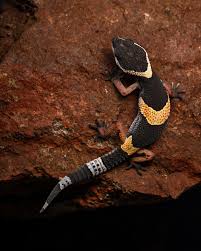
GECKO EAST INDIAN LEOPARD (Eublepharis hardwickii)
$100.00
Full Description
Here is a comprehensive care guide for the East Indian Leopard Gecko (Eublepharis hardwickii), a lesser-known but fascinating species of leopard gecko native to India and Bangladesh. These geckos are not the same as the common Eublepharis macularius (pet store Leopard Gecko) and require different care due to their natural forest-edge habitat and more secretive nature.
Eublepharis hardwickii – East Indian Leopard Gecko Care Guide
Species Overview
-
Common Name: East Indian Leopard Gecko
-
Scientific Name: Eublepharis hardwickii
-
Origin: Eastern India and Bangladesh (tropical & subtropical forests)
-
Size: 6–8 inches (15–20 cm)
-
Lifespan: ~10–15 years in captivity
-
Temperament: Shy, secretive, may be defensive if stressed
-
Experience Level: Intermediate to Advanced
Enclosure Setup
| Feature | Recommendation |
|---|---|
| Enclosure Size | Minimum 20-gallon long for one adult |
| Style | Horizontal tank with ample floor space |
| Substrate | Moisture-retentive mix: coconut fiber, soil, sphagnum moss |
| Décor | Leaf litter, bark, caves, cork flats, plants |
| Lighting | Low-level UVB (5.0 T5) recommended |
| Humidity | Moderate (50–70%) with localized moist areas |
| Ventilation | Moderate airflow to prevent mold buildup |
️ Temperature & Humidity
| Zone | Range |
|---|---|
| Warm Side | 82–86°F (28–30°C) |
| Cool Side | 72–76°F (22–24°C) |
| Night Temps | 68–72°F (20–22°C) |
| Humidity | 50–70% ambient; 80%+ in moist hide |
-
Use a low-wattage ceramic heater or radiant heat panel to maintain temperature.
-
Mist enclosure 1–2x daily depending on your local climate.
️ Diet & Feeding
| Category | Info |
|---|---|
| Diet | Insectivorous |
| Staples | Crickets, dubia roaches, black soldier fly larvae |
| Occasional | Mealworms, silkworms, waxworms (rarely) |
| Supplementation | Calcium (every feeding), multivitamin (1–2x/week), D3 (1–2x/week) |
| Feeding Schedule | Adults: every 2–3 days; juveniles: daily |
-
All insects should be gut-loaded and lightly dusted before feeding.
-
Provide a shallow water dish and refresh daily.
Behavior & Temperament
-
Shy and crepuscular—most active at dawn and dusk
-
Not ideal for frequent handling—may stress easily
-
Better viewed than handled, making them excellent for display enclosures
-
Solitary species—do not cohabitate
Cleaning & Maintenance
-
Spot-clean daily
-
Substrate refresh: every 4–6 weeks for non-bioactive setups
-
Deep clean with reptile-safe disinfectant as needed
-
Keep an eye on:
-
Retained shed
-
Weight loss or tail shrinkage
-
Respiratory issues (can arise with poor humidity control)
-
✅ Supplies Checklist
-
20–30 gallon horizontal terrarium
-
Moisture-retentive natural substrate
-
Hides (warm, cool, humid)
-
Low-level UVB light (optional but helpful)
-
Ceramic heater or radiant panel (thermostat-controlled)
-
Digital hygrometer and thermometer
-
Water dish and misting bottle
-
Insect source and supplements
⚠️ Special Notes
-
Eublepharis hardwickii are protected in some regions—ensure your gecko comes from a reputable, legal captive-bred source.
-
They thrive in more naturalistic or bioactive enclosures with leaf litter, soil, and moisture control.
-
While they resemble Leopard Geckos, they are genetically and behaviorally distinct and should not be housed or bred with other Eublepharis species.