
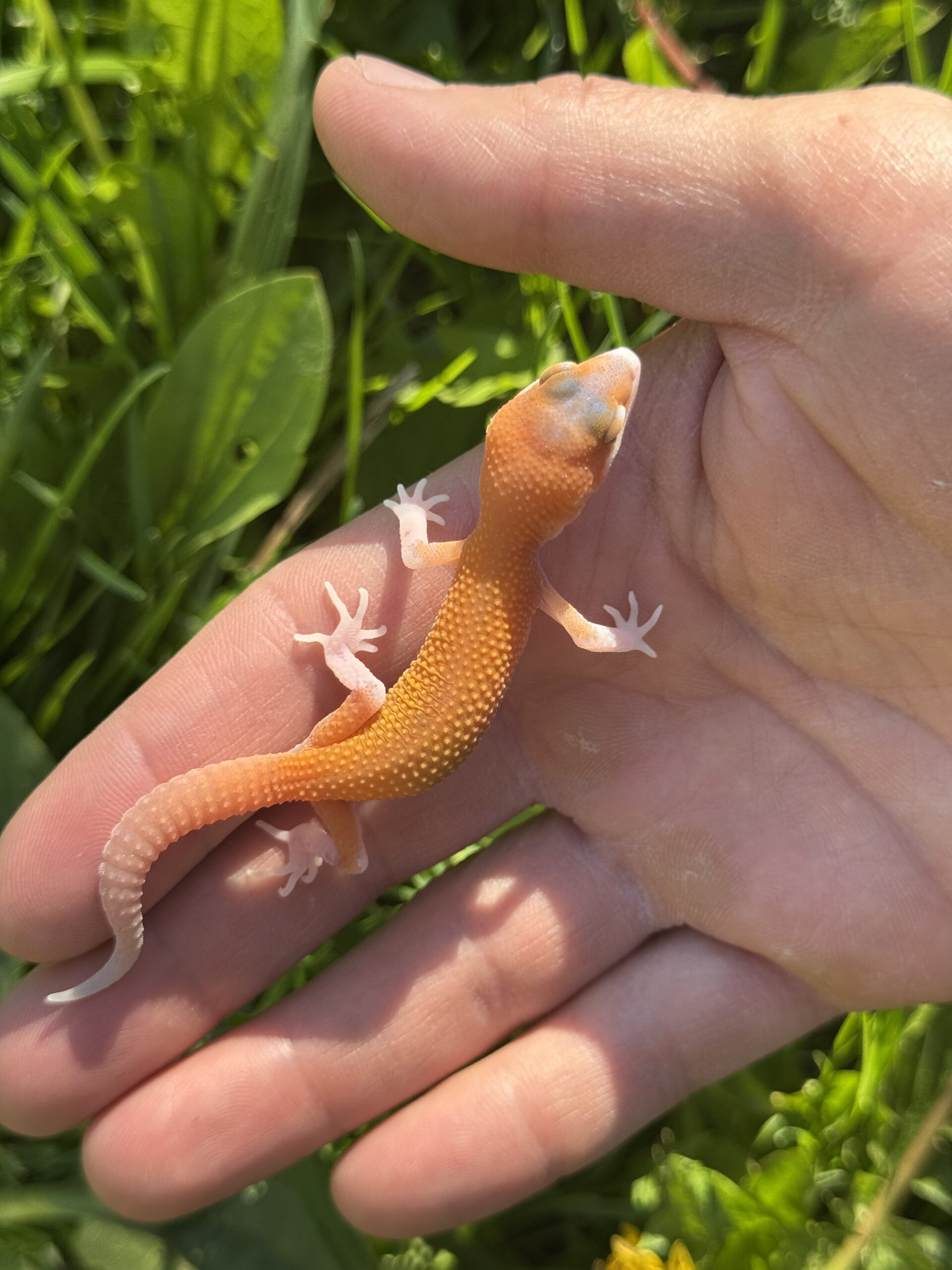
MANDARIN BLOOD EMERINE ECLIPSE FANCY LEOPARD GECKO (Actual picture of Gecko)
$200.00
Full Description
MANDARIN BLOOD EMERINE ECLIPSE LEOPARD GECKO
The Mandarin Blood Emerine Eclipse Leopard Gecko is a premium designer morph of Eublepharis macularius, combining some of the most sought-after leopard gecko traits. This stunning gecko features intense orange and red coloration from the Mandarin and Blood bloodlines, vibrant green tones from the Emerine gene, and the distinctive solid-colored eyes characteristic of the Eclipse trait. The result is a breathtaking gecko with exceptional contrast and coloration that stands out in any collection.
Scientific Name
Eublepharis macularius
Adult Size
- 7–10 inches (18–25 cm)
Lifespan
- 15–20+ years with proper care
Temperament
- Calm and easy to handle
- Curious and active during dawn and dusk hours
- Excellent for both beginner and experienced keepers
- Becomes quite personable with regular interaction
Care Guide
Enclosure
- Minimum 20-gallon long enclosure for one adult
- Secure enclosure with adequate ventilation
- Provide:
- Warm hide
- Cool hide
- Humid hide
Temperature
- Warm side: 88–92°F (31–33°C)
- Cool side: 75–80°F (24–27°C)
- Night temperatures: 70–75°F (21–24°C)
- Use a thermostat-controlled heat source for safety and consistency
Humidity
- Ambient humidity: 30–40%
- Humid hide: 70–80% humidity to aid shedding
Lighting
- Specialized lighting is not required
- Low-output UVB lighting may provide additional health benefits
- Maintain a regular day/night cycle
Substrate
Recommended:
- Paper towel
- Reptile liner
- Ceramic tile
- Naturalistic bioactive substrate setups
Avoid:
- Loose sand, especially for juveniles
- Calcium sand
Diet
Feed a variety of appropriately sized insects:
- Crickets
- Dubia roaches
- Mealworms
- Superworms
- Black soldier fly larvae
All feeder insects should be gut-loaded and dusted with calcium and vitamin supplements regularly.
Feeding Schedule
- Juveniles: Daily
- Subadults: Every other day
- Adults: 2–3 times per week
Water
- Fresh, clean water should always be available
- Replace water daily
Shedding
Provide a humid hide at all times to ensure successful sheds and prevent retained skin around the toes, tail tip, and eyes.
Housing
- Best housed individually
- Males should never be housed together
- Cohabitation is generally not recommended