
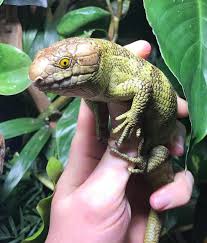
MONKEY TAILED SKINK (Corucia zebrata)
$1,600.00
Full Description
MONKEY-TAILED SKINK (Corucia zebrata) CARE GUIDE
Species Overview
| Trait | Details |
|---|---|
| Common Names | Monkey-Tailed Skink, Solomon Islands Skink |
| Scientific Name | Corucia zebrata |
| Adult Size | 24–32 inches (including tail) |
| Lifespan | 20–30+ years in captivity |
| Temperament | Slow-moving, shy, intelligent |
| Origin | Solomon Islands (endemic) |
| Lifestyle | Arboreal, communal in the wild |
| Conservation | CITES Appendix II (threatened species) |
Enclosure Requirements
Minimum Enclosure Size (for one adult)
-
4 ft (H) x 3 ft (L) x 2 ft (D) (tall and roomy)
-
Bigger is always better
-
Vertical space is essential
Habitat Style
-
Arboreal setup with:
-
Thick climbing branches
-
Vines, cork tubes, and platforms
-
Dense foliage (live or artificial)
-
Hiding areas at various levels
-
-
Bioactive setups work very well with this species
Substrate
-
Organic soil mix, coconut coir, orchid bark, leaf litter
-
Keep moist, but not soggy
️ Temperature, Humidity & Lighting
| Parameter | Ideal Range |
|---|---|
| Day temp | 78–84°F (25–29°C) ambient |
| Basking spot | 90°F (32°C) |
| Night temp | 72–75°F (22–24°C) |
| Humidity | 70–90% (critical for health) |
✅ Lighting
-
UVB Required: Yes (10–12 hrs/day)
-
Use T5 HO 5.0 or 10.0 UVB bulbs
-
-
Provide full-spectrum lighting for plant growth if bioactive
✅ Humidity Tips
-
Mist 2–3x daily or use an automatic misting system
-
Provide a large water bowl for ambient humidity
Diet
Monkey-tailed skinks are primarily folivores (leaf-eaters), but benefit from varied plant matter.
✅ Staple Foods
-
Dark leafy greens:
-
Collard greens, mustard greens, dandelion, hibiscus leaves
-
-
Other veggies:
-
Squash, pumpkin, bell pepper, zucchini, okra
-
-
Occasional fruit (10–15% max):
-
Papaya, mango, fig, banana, berries (sparingly)
-
❌ Avoid
-
High-oxalate greens (spinach, chard)
-
Animal protein (they are strict herbivores)
-
Lettuce (low nutrient value)
Supplements
-
Calcium without D3: 2–3x/week (if UVB is provided)
-
Multivitamin: 1x/week or every other week
Water & Hydration
-
Provide a large, shallow drinking bowl
-
Misting is essential for humidity and hydration
-
They will also drink droplets from leaves
Behavior & Enrichment
| Behavior | Description |
|---|---|
| Slow & calm | Moves slowly, rarely runs |
| Prehensile tail | Used for climbing and gripping |
| Arboreal nesting | Sleeps in dense vegetation or cork hides |
| Communal in the wild | Can live in pairs or small family groups (in large setups) |
| Social intelligence | Recognizes keepers and interacts with enrichment |
✅ Enrichment Ideas
-
Rotate branches and foliage
-
Provide browse (non-toxic branches)
-
Safe climbing furniture and platforms
Maintenance
| Task | Frequency |
|---|---|
| Spot clean waste | Daily |
| Mist enclosure | 2–3 times daily |
| Water change | Daily |
| Substrate top-up | Monthly |
| Full clean | Every 2–3 months (unless bioactive) |
Breeding Notes
-
Viviparous (gives live birth)
-
Gestation can take 6–8 months
-
Only 1–2 babies per birth
-
Must be housed in a bonded pair or group for breeding — introducing adults can be dangerous if not socialized properly
Common Health Issues
| Condition | Cause / Prevention |
|---|---|
| Respiratory infections | Low temps or humidity |
| Dehydration | Inadequate misting or humidity |
| Metabolic bone disease | No UVB or lack of calcium |
| Stress-related illness | Poor enclosure setup or handling stress |
✅ Care Summary Checklist
-
Tall enclosure with climbing space
-
UVB lighting + proper heat
-
High humidity (70–90%)
-
Strictly herbivorous diet
-
Frequent misting + large water dish
-
Minimal handling; observe and enrich
-
Bonded pairs/groups only if housing multiples