
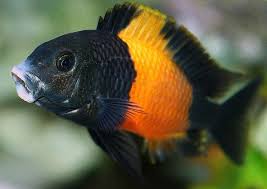
ORANGE FLAME TROPHEUS (Tropheus moorii bemba’)
$35.00
Full Description
Orange Flame Tropheus (Tropheus moorii “Bemba”) – Product Description
The Orange Flame Tropheus, also known as Tropheus moorii “Bemba”, is one of the most striking and sought-after variants from Lake Tanganyika. Known for its bold black body accented with a vibrant orange band, this fish adds incredible movement and color to any Tanganyikan display.
Tropheus are social, intelligent, and active rock-dwellers that thrive in groups. Their high energy, unique grazing behavior, and vivid contrasting coloration make them a favorite among advanced cichlid keepers looking to build a dynamic, natural Tanganyika setup.
Care Guide
Origin
-
Lake Tanganyika, Africa
-
Location variant: Bemba (northwestern shoreline)
Temperament
-
Highly social
-
Territorial but less aggressive when kept in large groups
-
Should be kept in colonies, not singly
Adult Size
-
4–5 inches (10–12 cm)
Minimum Tank Size
-
75+ gallons for a proper colony
-
Larger tanks recommended for multiple species
Water Parameters
-
Temperature: 75–80°F (24–27°C)
-
pH: 8.2–9.0
-
Hardness: Hard to very hard water
-
Requires pristine, stable, well-oxygenated water
Diet
-
Primarily herbivorous—grazers in the wild
-
Feed:
-
Spirulina-based flakes and pellets
-
Vegetable matter and algae-based foods
-
Light supplement of quality cichlid pellets
-
-
Avoid high-protein or fatty foods (e.g., brine shrimp, bloodworms) to prevent bloat
Tank Setup
-
Rock-heavy aquascape with caves and crevices
-
Strong water movement and high oxygen levels
-
Sandy or fine substrate
-
Plenty of grazing surfaces (rocks with natural algae growth)
Behavior & Compatibility
-
Best kept in colonies of 12+ individuals to spread aggression
-
Do NOT mix different Tropheus variants (they hybridize easily)
-
Compatible with:
-
Petrochromis (with caution, depending on tank size)
-
Some Lamprologus/Neolamprologus species
-
Other peaceful Tanganyika rock-dwellers
-
-
Avoid Malawi species or aggressive Tanganyikans
Breeding
-
Maternal mouthbrooders
-
Females carry eggs and fry in their mouth for ~28 days
-
Provide flat rocks and open rock areas for courtship
Lifespan
-
8–10 years with excellent care
1 in stock